What you need to know before you purchase solar panels for your home. Trustworthy, practical advice from industry experts.
Do you plan to purchase battery storage? If yes, how much is cost-effective for your situation?
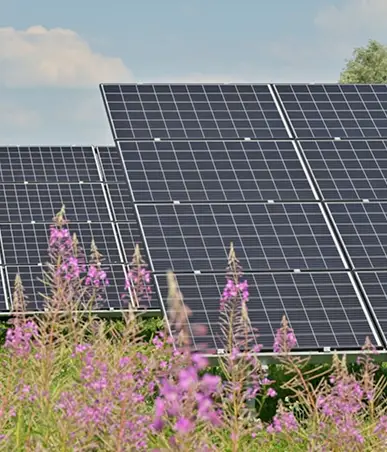
Do you have enough land to install a ground-mounted solar array? Or do you have another structure that can support solar panels?
Are you a member of a homeowners’ association? If yes, do they have rules regarding solar installations? According to Texas law, HOAs cannot restrict solar devices outright, but they can restrict solar panels under certain conditions.
Does your municipality have rules regarding residential solar? Are permits required? If yes, how much do they cost and how long does it take to get them?
Leaky houses can let hot and cold air infiltrate your home through inefficient windows and walls, gaps around the windows and doors or through uninsulated attics and electrical outlets.
Think about it this way: You wouldn’t increase the size of your air conditioning system to compensate for leaving the windows open. You would shut the windows!
Don’t purchase expensive and excess solar panels to produce energy that doesn’t benefit you directly. Instead, reduce your needed energy load as much as possible before you estimate your energy generation needs.
Can you keep up with maintenance?
Have you analyzed your electric bills?
Do you want or need battery storage?
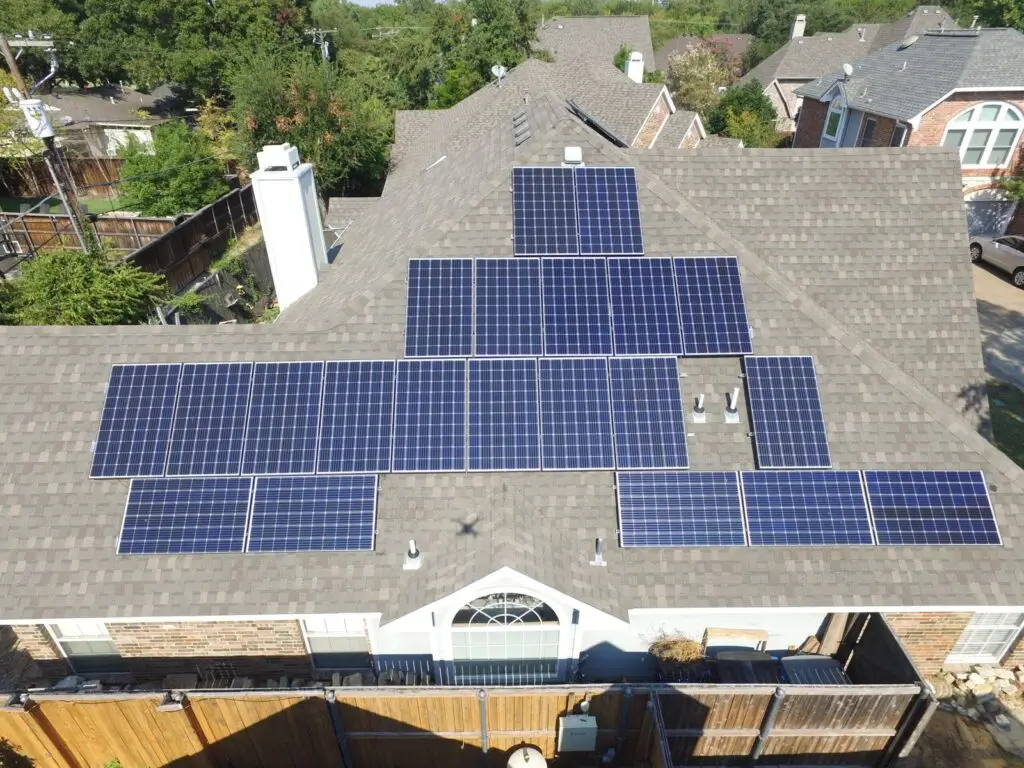
Do you know your roof orientation?
How long will you keep your home?
Is your home insulated?
Does your home have sunlight coverage?
Does your HOA approve?
An electricity supplier can be a Retail Electric Provider (REP), electric cooperative or municipal utility. Many electricity suppliers offer their customers the opportunity to purchase renewable energy electricity. You may be charged an additional fee or a different rate than customers who purchase fossil fuel generated electricity. You’ll need to do your research to determine whether they are providing renewable energy electricity or if they are providing fossil fuel generated electricity that is backed by Renewable Energy Certificates (RECs).
Some people think this is the least desirable method for generating renewable energy electricity, because the company is not adding any new renewable energy to the grid, they are only taking credit for the renewable energy that was added by someone else. Nevertheless, any time someone purchases renewable energy from an electricity supplier, it sends a signal to the marketplace that clean energy production is important to consumers who want clean energy choices.
Solar panels are the best option for generating renewable energy in North Texas.
Very few locations in the DFW metroplex are good candidates for wind turbines due to cost, size and intermittency.
Solar United Neighbors offers group purchasing opportunities in Texas so that homeowners can get better pricing than if they were buying rooftop solar on their own.
There are several companies in the DFW area that lease solar panels to homeowners. The company will install solar panels on your home. They retain ownership of the panels and are responsible for the maintenance. You will pay a fixed monthly cost in exchange for the electricity the panels generate. The company receives all tax rebates and incentives.
The U.S. Department of Energy defines community solar as “any solar project or purchasing program, within a geographic area, in which the benefits flow to multiple customers such as individuals, businesses, nonprofits, and other groups. In most cases, customers benefit from energy generated by solar panels at an off-site array.“ Community solar customers typically subscribe to—or in some cases own—a portion of the energy generated by a solar array and receive an electric bill credit for electricity generated by their share of the community solar system.”
Currently there are no community solar projects in the DFW area for generation of electricity.
However, many for-profit solar development companies sell electricity that is generated for a particular organization or group of organizations through a renewable energy Power Purchase Agreement (PPA). These usually require the purchase of a very large amount electricity for at least five years or more.
As the market continues to evolve, it is possible that some companies may choose to generate and sell electricity to groups of individuals as well (e.g, a new housing development that includes retail and commercial customers or large groups of consumers who want to send a signal to the marketplace that renewable energy is highly desired by consumers and profitable.)
Because rooftop solar is a significant and complex purchase, you’ll need to do your homework before selecting an installer. There are many organizations that have created resources to help. You’ll find several of those listed at the bottom of this section.
You’ll also need to familiarize yourself with the Buyer Beware section below before you begin talking to installers. If you know what to look for, you are less likely to be scammed.
Our affiliate, The American Solar Energy Society, has compiled a list of questions to ask potential installers. NTREG’s Questions to Ask Installers uses the ASES questions and also includes guidance as to what you are looking for in their answers.
Do you know anyone who has rooftop solar? Ask trusted friends, neighbors, and family for their recommendations and experiences.
When researching specific installers, check websites such as Better Business Bureau, Google and Yelp for reviews and testimonials from past customers.
Don’t settle for the first quote. Compare quotes from at least three installers to ensure you’re getting a fair price and that their proposals are comprehensive.
Also, ask the providers for the system size they would recommend, then ask for a second quote for a system about 33 percent smaller than their recommendation. A smaller system will cost less and send less energy back to the grid. It’s becoming more difficult to find fair compensation for energy sent back to the grid.
One way to get quotes fast is to use websites that will solicit multiple bids for you and then provide detailed information to help you make your decisions (e.g., energysage.com; solarreviews.com and solar.com). They make money if/when you select an installer, who then pays them a small lead generation fee.
Verify that the installer is licensed and certified by relevant state licensing boards and organizations like the North American Board of Certified Energy Practitioners (NABCEP).
Inquire about the installer’s experience in the solar industry, their history, and whether they have local experience. Regardless of whether they are a local or national provider, do they have experience in your area with permitting, weather, roof types, services, etc.
Ask about the warranties offered on both the equipment and the installation, including labor and workmanship warranties.
A performance guarantee for design and availability is desirable. (e.g., does the system produce the energy it was supposed to produce? Are the down times inconsequential?)
While you are shopping, be sure to note and assess each installer’s customer service, communication skills, responsiveness and ability to address any questions or concerns.
Ask the installer for multiple references that you can call. If possible, visit previous installations to see the quality of the work firsthand.
Limited time offers, special programs, pushing you to sign now to prevent you from doing your research or getting a second opinion or bid.
To appear more credible, they falsely claim they are affiliated with legitimate solar companies, utilities or government agencies.
“Your electricity bill will be zero;” free solar panels; unrealistic savings; inflated return on investment (ROI).
Watch for high interest loans with unfavorable terms and conditions; hidden fees and balloon payments; misleading contracts that overpromise on savings, efficiency or warranties.
Some crooked sales reps falsely claim that homeowners qualify for nonexistent or inflated federal, state, or local incentives for solar installations.
POSSIBLE SOURCES
Again, shop at least three sources. Check with your own bank, which may give you a lower rate if you’re a good customer. Search for institutions that offer specialized solar loans. Check resources like EnergySage.
If you get a loan through your installer, beware of dealer fees, which increase the cost of the loan.
For example, Oncor encourages the adoption of solar energy because it helps strengthen the electricity grid. To qualify, systems need to be within a specific size range (3kW to 15kW), include a battery, and meet certain orientation and tilt requirements.
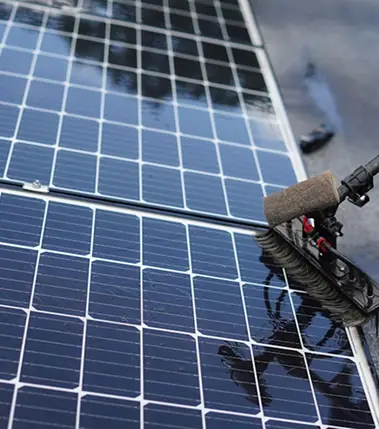
How often to clean your panels depends on where you live and how much rain you get. You’ll want to remove any dirt, dust or debris that minimizes the amount of sunlight that reaches your panels. Long-term solar panel owners in north Texas say that they generally spray off the panels once a year, but less if the rain has cleaned the panels for them.
Look for panel damage, loose connections, or signs of animal nesting. You may want to outsource this task if you don’t like heights; see if your solar installer offers an annual maintenance inspection similar to what many HVAC companies offer.
This can help you identify any production issues early. If a large problem arises, your monitoring software should notify you immediately.
Chair, North Texas Renewable Energy Group
Director, Environment and Development, North Central Texas Council of Governments
Former NTREG President
Retired Strategy & Technology Manager at Oncor Electric Delivery and author of The Joy of Efficiency: How to Live and Work Better With Less
Solar Energy International Trained Mechanical Engineer
Director of Communications, Texas Solar Energy Society
NTREG Clean Energy Initiative Project Leader
We’ve all heard horror stories about people who were bullied and scammed by rooftop solar installers. There are a lot of false claims and bad actors out there. Fortunately, there are a lot of good guys, too. Solar power is a great fit for many homes. Kudos to the Texas Legislature for their work in the 2025 Session to help protect both the industry and consumers.
As the chair of a non-profit, volunteer driven organization whose purpose is to educate and advocate for renewable energy, we’re proud to share this new educational microsite called The Truth About Residential Solar with you. Yes, we’re advocates for rooftop solar, but we are also practical and concerned about the same things that you are (total cost of ownership, long term benefits, how to find a good contractor, how to avoid a scam, energy intermittency, etc.).
The purpose of this microsite is to give you as much accurate, bias-free information as possible so you can make well-researched, fact-based decisions about rooftop solar. It’s not marketing fluff, but it IS written for the layperson who has just begun their due diligence when considering rooftop solar. If you find material in here that is not accurate, I want to hear about it personally (chair@NTREG.org). I promise that thoughtful questions and comments will get a thoughtful reply.
We are grateful to our partner, the North Central Texas Council of Governments (NCTCOG) for helping us disseminate this information as well as our other co-sponsors and contributors: Texas Solar Energy Society, Solar United Neighbors, the Texas Electric School Bus Project, and others.
We hope this content answers all your questions. If not, we invite you to join us at any of our standing monthly meetings. We address many ‘responsible energy’ issues (not just residential solar power), and you will be able to learn more and network with solar power owners, as well as with our ‘energy geeks’ who have been involved with rooftop solar for many years (and in some cases, decades). Or, as I mentioned, reach out to me personally.
Congratulations on your decision to learn more about rooftop solar. You’ve made a wise decision.
North Central Texas Council of Governments is a voluntary association of, by, and for local governments, established in 1966. We help our members plan for common needs, strengthen our individual and collective power, recognize regional opportunities and resolve regional problems. We represent 16 counties, 220 cities and 53 school districts and other special districts.
Why is NCTCOG interested in rooftop solar? Because energy is the economic driver of our economy. It is used by literally every person in north Texas, both at home and at work. We take for granted that electricity will always be there when we need it. And that is because the people who came before us built a system that would meet the needs of future generations as well as their own.
Now it’s our turn to ensure that future generations have access to all the energy they need and want.
Between 2026 and 2050, the population in our service area is projected to grow by 43 percent. (If you think traffic is bad now, think about how bad it could be with almost double the people on the road. But that’s another topic for a different day.)

This is why it is critical that our current institutions think about and plan for how to meet those rapidly increasing energy needs. We need to generate enough new energy to accommodate the population growth, expanding commercial and industrial sectors and the new energy-intensive businesses like cryptocurrency and artificial intelligence.
The non-partisan, nonprofit public policy research and advocacy organization Texas 2036 advocates for an “all of the above” energy strategy. Why? Because no one sector (fossil fuels, nuclear, renewables, hydrogen) can meet our projected demand by itself.

Residential solar is an excellent option in the “all of the above” portfolio. It is one of the lowest cost options that will help protect Texas’ vulnerable grid and ensure that homeowners have a lower cost choice in how to purchase their electricity (depending upon how you purchase it). This guide explains those options in more detail so you can make an educated decision.
NCTCOG supports long term planning, and we support consumer choice. We’re happy to share this information with those who are thinking about making a switch. I made the switch. And I’m glad I did!